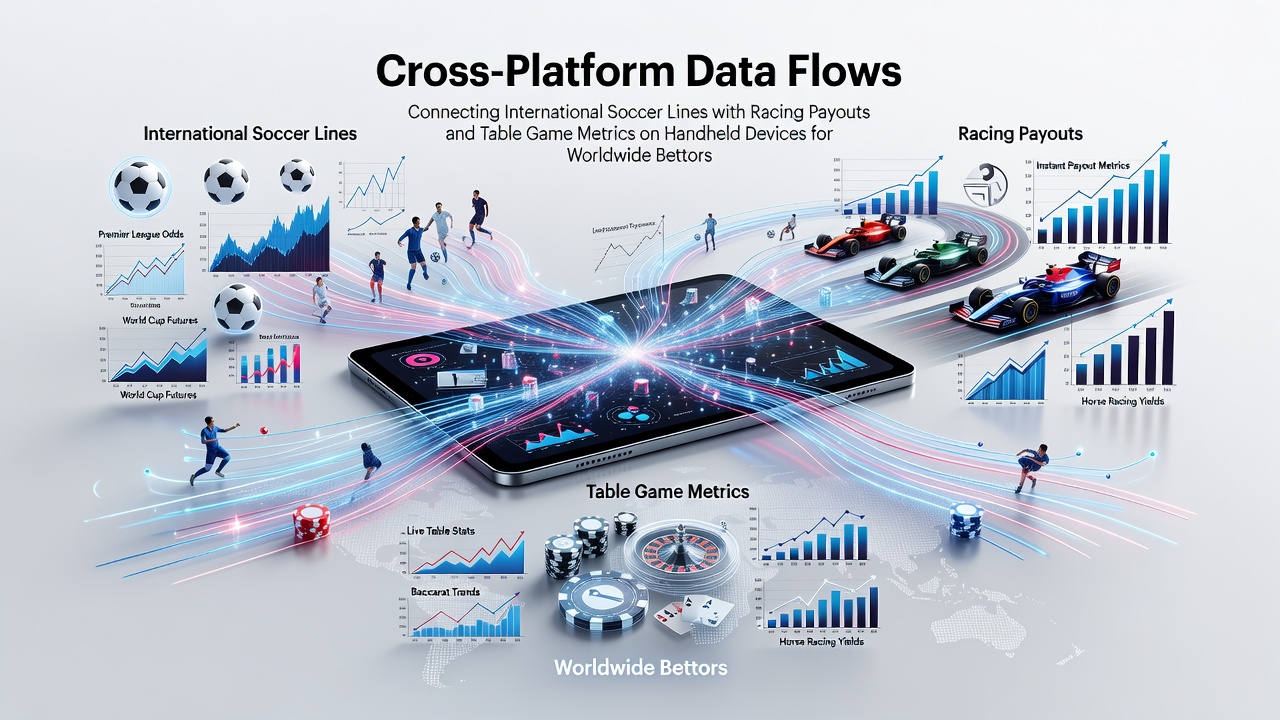
Cross-Platform Data Flows Connecting International Soccer Lines with Racing Payouts and Table Game Metrics on Handheld Devices for Worldwide Bettors
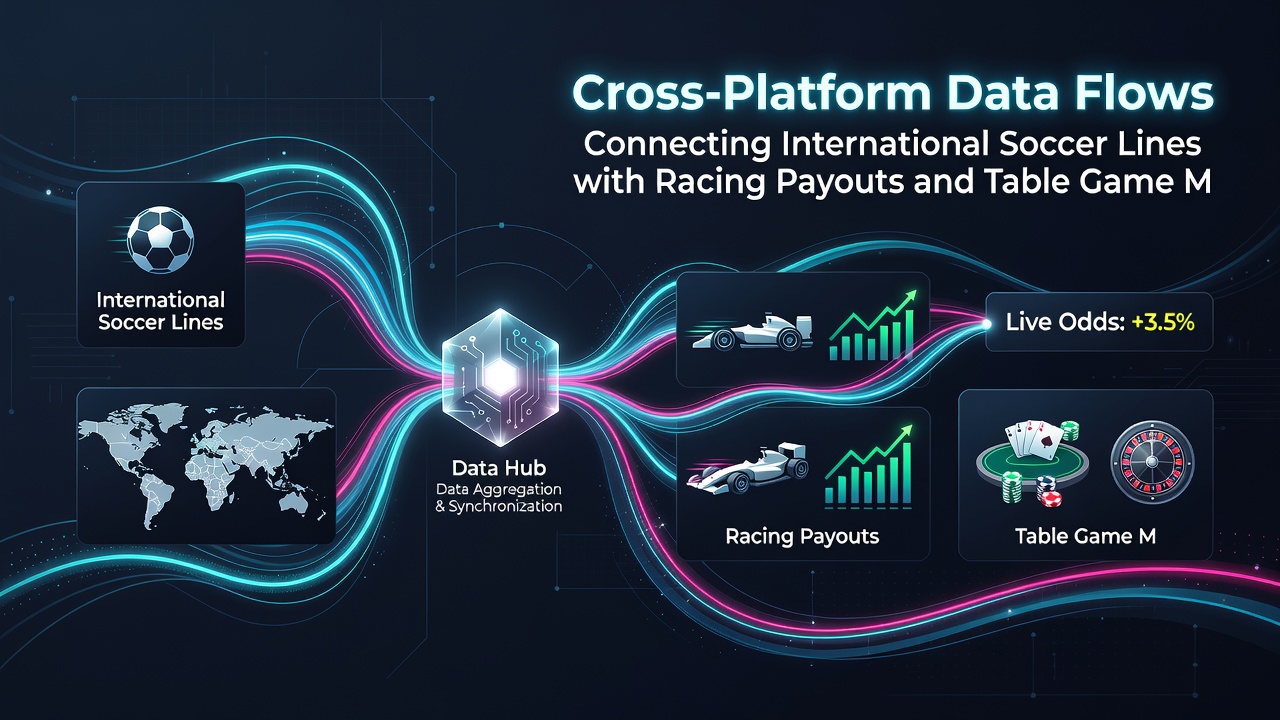
International betting markets have developed interconnected data systems that link soccer match probabilities from leagues across Europe, South America, and Asia with racing event payouts and table game statistical trackers, and these connections operate through specialized applications on handheld devices used by participants in multiple regions. Observers note that application programming interfaces serve as the primary mechanism for transmitting live odds updates, payout calculations, and variance measurements in unified streams that update simultaneously across different event categories.
Core Mechanisms of Data Transmission
Operators maintain centralized servers that aggregate information from soccer fixtures, thoroughbred and harness racing schedules, and casino table outcomes, then distribute this combined dataset to mobile platforms through encrypted channels that comply with regional licensing requirements. In October 2026 several jurisdictions implemented standardized data exchange formats that reduced latency between soccer line movements and corresponding adjustments in racing payout tables, allowing handheld applications to reflect these shifts within seconds of the originating market change. Researchers at institutions tracking digital gambling patterns have documented how these flows incorporate table game metrics such as blackjack deviation rates and roulette frequency logs, which users access alongside sports and racing data on the same device interface.
Regional Variations in Platform Architecture
European markets utilize frameworks developed under directives from the Malta Gaming Authority, while North American systems often reference guidelines issued by the Nevada Gaming Control Board; both approaches feed into handheld applications that display soccer probabilities next to racing dividend calculations and table game volatility indicators. Data shows that Australian regulatory records from the past year indicate similar integration patterns, where portable device users receive synchronized notifications covering football matches, greyhound races, and poker probability models without switching between separate applications. Those who monitor these systems report that the architecture relies on cloud-based synchronization layers that pull from multiple licensed data providers, ensuring consistency for bettors located in different time zones.
Technical Components Supporting Worldwide Access
Handheld platforms employ real-time databases that store historical soccer line movements alongside racing payout histories and table game metric archives, then apply algorithmic filters to present relevant cross-market comparisons. Mobile operating systems facilitate background data pulls that maintain continuous connections even when users navigate between different sections of a betting application. Figures from industry reports reveal that connection stability improved after the adoption of 5G networks in major urban centers, which reduced interruptions during live events spanning soccer tournaments and concurrent racing meetings.
Security and Compliance Considerations
Encryption protocols protect the transmission of sensitive financial and statistical information across borders, with audits conducted by independent bodies verifying that data flows meet established security benchmarks. According to records maintained by the Nevada Gaming Control Board, compliance checks in 2026 focused on cross-platform audit trails that trace soccer odds adjustments through to racing payout recalculations and table game metric updates on individual handheld accounts. Additional oversight comes from academic studies published in journals focused on digital systems, which examine how latency variations affect user access to aligned market information across continents.
Future Developments in Data Alignment
Industry organizations have begun testing enhanced machine learning models that predict correlations between soccer fixture outcomes and racing event payouts, with preliminary integrations appearing in select handheld applications during late 2026. These models incorporate table game variance data to generate comparative analytics that users can review on portable screens. Government agencies in multiple jurisdictions continue to evaluate the regulatory implications of such expanded data sharing, particularly as more participants rely on single-device interfaces for monitoring diverse betting categories.
Conclusion
Cross-platform data flows have established operational linkages between international soccer lines, racing payouts, and table game metrics that function through handheld device applications serving bettors globally. The infrastructure supporting these connections continues to evolve under regulatory frameworks from varied regions, with technical standards adopted in October 2026 contributing to improved synchronization across markets. Observers continue to track how these systems maintain consistency and security as usage expands.