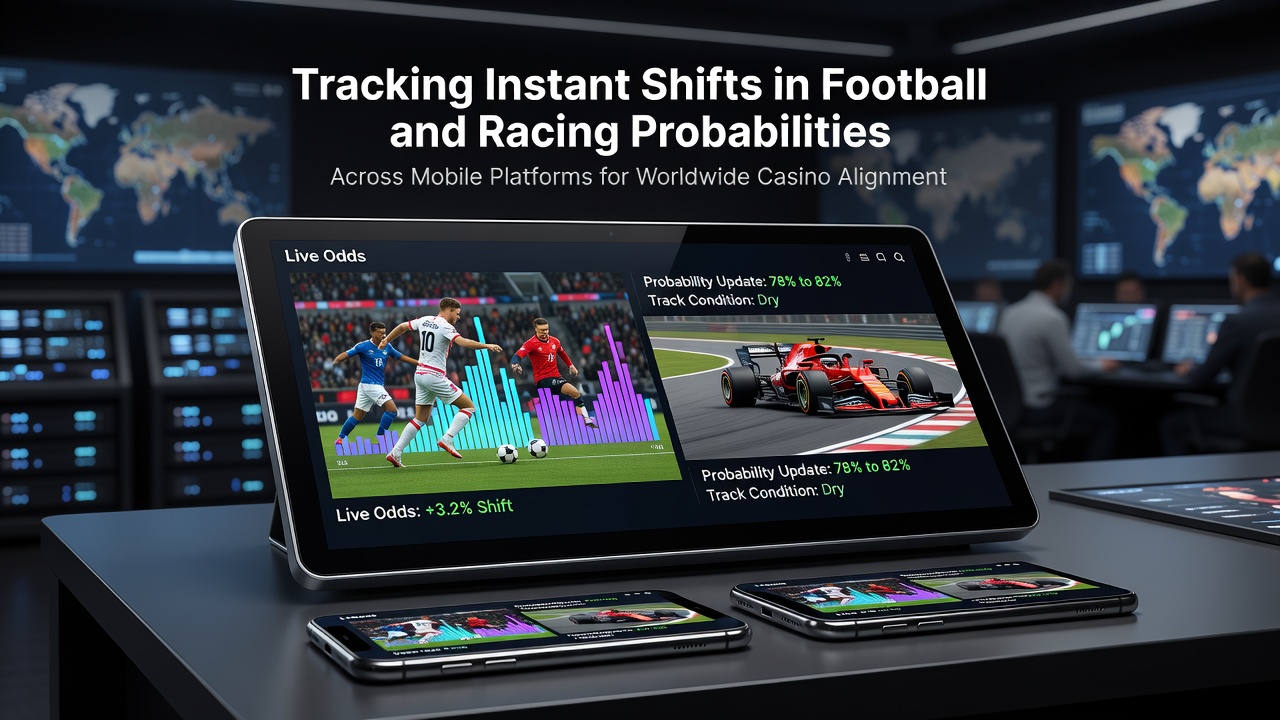
Tracking Instant Shifts in Football and Racing Probabilities Across Mobile Platforms for Worldwide Casino Alignment
Real-time probability tracking for football matches and horse racing events has expanded through mobile platforms that deliver continuous data streams to operators and users in multiple regions. These systems capture instantaneous changes in odds derived from betting volumes, player performance metrics, and external variables such as weather conditions at race tracks or team substitutions during matches. Data from mobile applications flows into centralized dashboards that enable casino platforms to align offerings across international markets without manual intervention.
Core Mechanisms Driving Live Updates
Mobile platforms integrate application programming interfaces that pull probability figures from multiple sources at intervals measured in seconds rather than minutes. Football probabilities adjust when key events occur on the pitch while racing odds shift based on tote pool movements and late jockey announcements. Observers note that operators in Europe and Asia rely on these feeds to maintain consistent pricing structures. One study released in early 2026 highlighted how handheld devices now process over 10,000 data points per minute during peak European league weekends, allowing alignment between Swedish, Australian, and North American casino environments.
Developers have incorporated machine learning models that flag anomalies in probability curves before they become visible to the broader market. These models compare historical patterns against current inputs from sensors at venues and social media signals. When a sudden injury report emerges during a football fixture, the updated probability appears simultaneously on devices operated by aligned casino networks. Racing platforms apply similar logic to track pace data from GPS-equipped horses, converting those measurements into revised win probabilities within the same mobile interface.
Cross-Market Synchronization Practices
Worldwide casino alignment depends on standardized data protocols that let platforms in different jurisdictions share probability information without violating local rules. In October 2026, several operators expanded their use of encrypted mobile channels to transmit live football and racing figures between European and Oceanian servers. The Malta Gaming Authority has documented increased adoption of these channels among licensed entities seeking uniform risk exposure across borders. Meanwhile, reports from the Nevada Gaming Control Board indicate parallel developments in the United States where mobile synchronization supports consistent handling of interstate racing wagers.
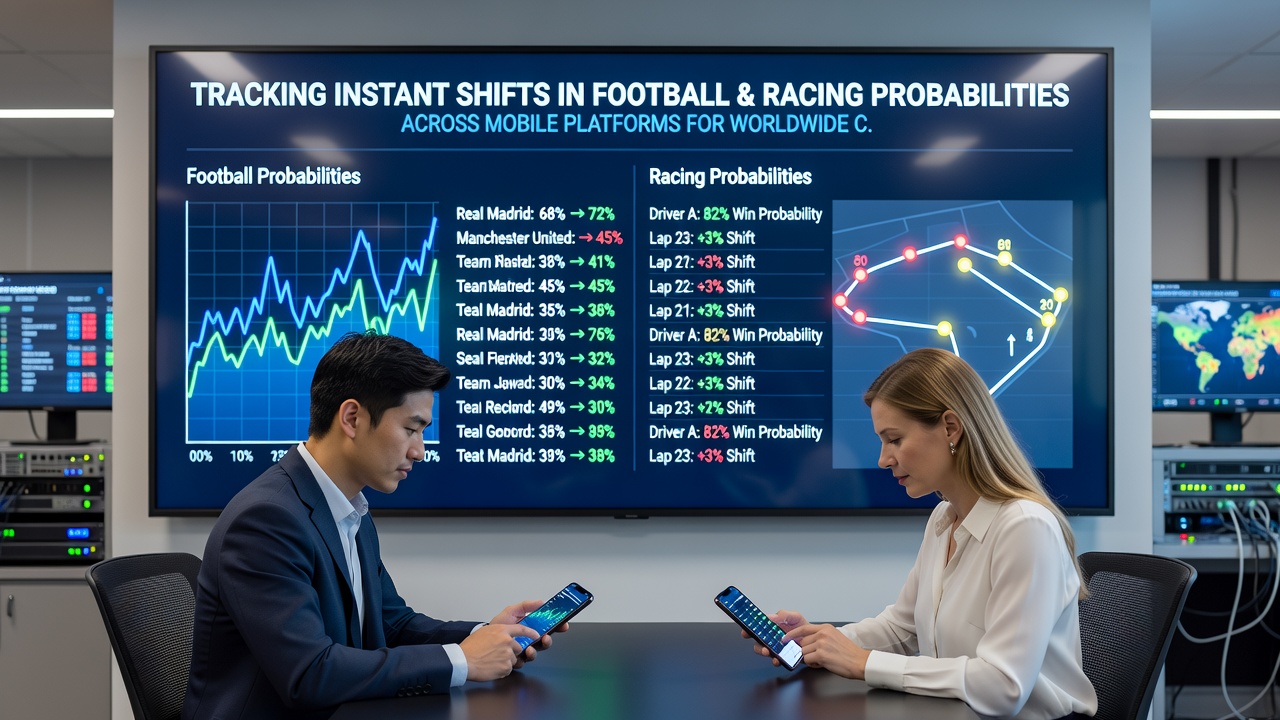
Technicians configure mobile applications to monitor both sports simultaneously, presenting football goal probabilities alongside racing finish-time estimates on a single screen. This dual-view approach reduces the time required for risk teams to rebalance portfolios when one market moves sharply. Industry organizations such as the European Gaming and Betting Association have recorded cases where synchronized mobile feeds prevented discrepancies that previously arose when separate systems handled each sport. The result appears in unified settlement processes that apply the same timestamp to probability shifts regardless of geographic location.
Technical Infrastructure Supporting Global Reach
Cloud-based servers positioned in multiple continents receive compressed data packets from mobile devices and redistribute them to casino management systems. These servers employ edge computing nodes to minimize latency during high-volume periods such as major football tournaments or triple-crown racing meets. According to research published by the University of Sydney's gambling studies unit, average transmission delays dropped below 800 milliseconds for racing probability updates in 2026, a figure that supports near-simultaneous alignment across time zones. Football platforms show comparable performance when handling live corner or card probabilities that influence broader market lines.
Security protocols built into the mobile layer encrypt each probability packet before transmission. Regulatory bodies in Canada and Australia require operators to maintain audit logs of every shift, including the exact mobile device ID that first recorded the change. Such requirements ensure traceability when disputes arise over final settlement values. Observers point out that these logs also help identify patterns where certain probability movements correlate across seemingly unrelated events, prompting further investigation into data integrity.
Future Developments in Mobile Probability Tracking
Engineers continue to refine sensor integration on handheld devices so that users receive contextual alerts when football or racing probabilities cross predefined thresholds. These alerts feed directly into casino alignment engines that adjust promotional offers or exposure limits in real time. Data from the Australian Communications and Media Authority shows growing numbers of licensed platforms incorporating such features ahead of the 2027 racing season. Parallel work in academic labs focuses on reducing bandwidth consumption while preserving the granularity needed for accurate probability calculations.
Conclusion
Mobile platforms have established the primary conduit for tracking instant shifts in football and racing probabilities, supplying the data backbone that supports worldwide casino alignment. Standardized protocols, low-latency infrastructure, and regulatory oversight from multiple jurisdictions combine to maintain consistency across markets. As device capabilities advance and synchronization standards mature, operators gain tools to manage dynamic probabilities without introducing regional discrepancies. The infrastructure in place by late 2026 already demonstrates measurable reductions in settlement variances between sports and geographies.